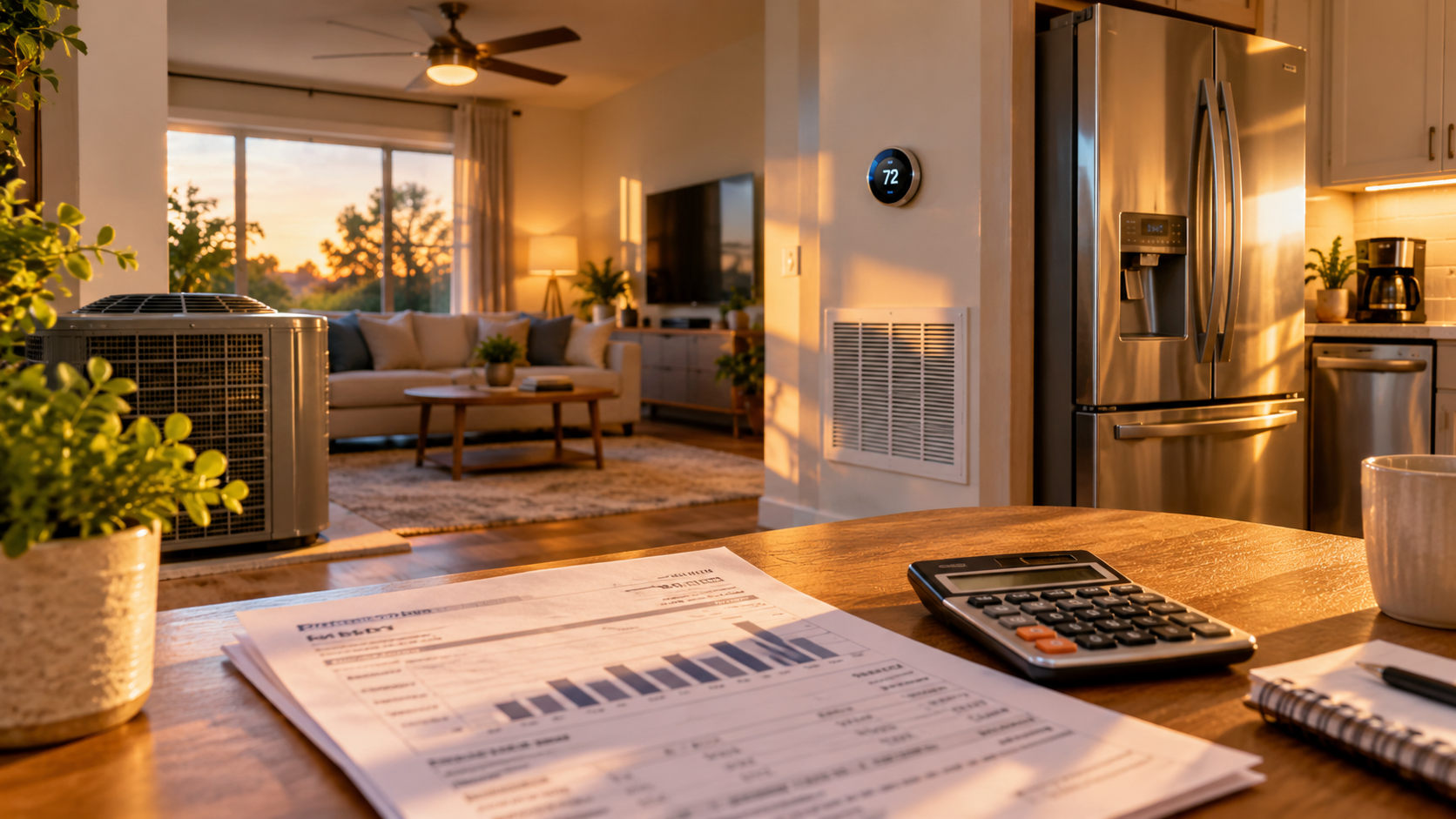
If your electric bill suddenly feels too high, the cause is usually one of three things: you are using more electricity, the price of electricity has increased, or something in the home is operating less efficiently than before. Sometimes all three happen at once.
The latest U.S. Energy Information Administration data put the average residential electricity price at 18.31 cents per kilowatt-hour in July 2026, up 4.9% from a year earlier. That means a household can see a higher bill even when its electricity use barely changes. But rate increases are only part of the story. Heating and cooling, water heating, appliances, air leaks, aging equipment, and small devices running around the clock can all push monthly usage higher.
This guide walks through the most common reasons electric bills rise, how to tell which one applies to your home, and what you can do about it.
1. Electricity Rates Went Up
Start with the simplest possibility: the price you pay per kilowatt-hour may have increased. Compare the “rate,” “energy charge,” or “price per kWh” on your current bill with the same month last year. If your utility uses tiered or time-of-use pricing, also check whether more of your usage fell into a higher-priced period or tier.
For a quick benchmark, use our Electricity Prices by State tool. State averages will not match every utility, but they can show whether your local rate is broadly high or low compared with the rest of the country.
2. Hotter or Colder Weather Changed HVAC Use
Heating and cooling are often the largest energy load in a home. ENERGY STAR says nearly half of household energy use goes to heating and cooling, so extreme temperatures can move a bill dramatically even when nothing else changes.
Common clues include a bill spike during a heat wave or cold spell, longer HVAC run times, rooms that are harder to keep comfortable, or a system that cycles frequently. If cooling is the issue, our Air Conditioner Running Cost Calculator can estimate how much your system may be adding to the bill.
3. Your Thermostat Settings Changed
A few degrees can matter when an HVAC system runs for hours every day. A lower summer thermostat setting or a higher winter setting increases the temperature difference between indoors and outdoors, which generally increases heating or cooling demand.
Smart thermostats can help households match temperature settings to occupancy and schedules. ENERGY STAR notes that homes with high heating and cooling bills may save about $100 a year with an ENERGY STAR certified smart thermostat, although actual savings vary.
4. A Dirty HVAC Filter Is Restricting Airflow
A dirty filter makes the blower work against more resistance and can reduce airflow through the system. ENERGY STAR recommends checking filters monthly during heavy-use seasons and replacing or cleaning them when dirty.
If airflow from your vents has weakened, rooms take longer to reach temperature, or your HVAC system seems to run more than it used to, the filter is one of the first things worth checking.
5. Your Air Conditioner or Heat Pump Needs Maintenance
Dirty outdoor coils, low airflow, refrigerant problems, blocked condensate drains, and other maintenance issues can make cooling equipment run longer. ENERGY STAR notes that airflow problems alone can reduce system efficiency by as much as 15%.
That does not mean every high bill requires a service call. But if the system is running continuously, cooling poorly, making unusual sounds, icing up, or showing a sudden change from its normal behavior, it is reasonable to investigate.
6. Air Leaks Are Letting Conditioned Air Escape
Gaps around attic hatches, plumbing penetrations, recessed lights, doors, windows, and other openings allow outdoor air to enter and conditioned air to escape. The Department of Energy says reducing drafts and air leaks can produce meaningful energy savings, with potential savings varying widely by home.
Drafty rooms, large temperature differences between floors, or an HVAC system that struggles on windy days are common signs. A professional home energy assessment can identify leaks with tools such as a blower door and infrared camera.
7. Insulation Is Inadequate
Insulation slows heat flow between the inside and outside of the home. When attic, wall, floor, or crawlspace insulation is inadequate, heating and cooling equipment must work harder to maintain a comfortable indoor temperature.
Insulation problems are especially worth considering in older homes, homes with large seasonal temperature swings, or houses where the top floor becomes unusually hot in summer or cold in winter.
8. Ductwork Is Leaking
In forced-air systems, leaks in ducts can send heated or cooled air into attics, crawlspaces, garages, and other unconditioned spaces instead of into the rooms where you need it. ENERGY STAR says sealing and insulating ducts can improve heating and cooling efficiency by as much as 20% in some homes.
Look for rooms that receive weak airflow, visible disconnected ducts, dusty streaks around joints, or major temperature differences between rooms.
9. Your Water Heater Is Using More Energy
Water heating is one of the larger energy uses in many homes. More showers, guests, laundry, dishwashing, a higher temperature setting, sediment buildup, or an aging heater can all increase consumption.
If your electricity use rose after a change in household size or hot-water habits, the water heater deserves attention—especially if it is electric.
10. An Appliance Is Old, Failing, or Running Too Often
Refrigerators, freezers, dryers, dishwashers, dehumidifiers, pumps, and other appliances can become more expensive to operate when components wear out or usage patterns change.
A refrigerator with a failing door gasket or dirty condenser area may run longer. A dryer with restricted airflow can extend drying cycles. A second refrigerator or freezer in a garage can quietly add year-round electricity use.
Use our 100 Household Appliances Electricity Database to compare typical wattage and estimated operating cost, or use the Electricity Cost Calculator when you know the wattage of a specific device.
11. Space Heaters Are Running More Than You Realize
Portable electric resistance heaters are typically high-wattage devices. A 1,500-watt heater running for eight hours uses 12 kWh. At 18.31 cents per kWh, that is about $2.20 per day, or roughly $66 in a 30-day month if used every day.
One heater may be manageable. Several heaters running for long periods can transform a winter electric bill.
12. Electric Vehicle Charging Was Added to the Home
An EV can shift a meaningful amount of energy use from gasoline to the household electric bill. That is not necessarily a higher total transportation cost, but it can make the utility bill look very different.
If you recently bought an EV, compare the bill increase with the amount you previously spent on fuel rather than treating the new electricity use as pure household waste.
13. More People Are Home During the Day
Remote work, school schedules, visitors, a new baby, or a family member staying home more often can increase HVAC use, cooking, laundry, electronics, lighting, and hot water at the same time.
This kind of increase is easy to overlook because no single appliance appears to be responsible.
14. Standby Power Is Adding Up
Some electronics consume electricity even when they appear to be off. The Department of Energy refers to this as standby power. Individual devices may draw very little, but a house can contain dozens of connected televisions, consoles, routers, speakers, chargers, computers, smart-home devices, and kitchen appliances.
For devices that do not need to remain continuously powered, switched power strips and smart plugs can make it easier to shut off groups of electronics.
15. Your Utility Bill Includes More Than Energy Use
Not every bill increase comes from higher kWh consumption. Utilities may change fixed customer charges, delivery charges, riders, taxes, fuel adjustments, or other line items. Some bills also include balances from prior months or estimated meter readings that are later reconciled.
Compare both total kWh used and total dollars charged. That distinction quickly tells you whether the problem is mostly consumption, pricing, or both.
How to Diagnose a High Electric Bill in 10 Minutes
- Compare kWh, not just dollars. Look at the same month last year.
- Compare your electricity rate. Check cents per kWh and fixed charges.
- Think about weather. Was the month unusually hot or cold?
- Check HVAC run time and filter condition.
- List new loads. EV, space heater, dehumidifier, hot tub, second refrigerator, home office, or guests.
- Estimate the biggest devices. Use our calculators instead of guessing.
What Should You Fix First?
Start with the lowest-cost checks: thermostat schedules, dirty filters, unnecessary electric heaters, equipment accidentally left on, standby loads, and changes in household routines. Then look at air sealing, duct leakage, insulation, and equipment performance.
If the home has persistent comfort problems or you cannot explain unusually high usage, a home energy assessment can help identify the building and mechanical issues that matter most. You can also work through our Home Energy Savings Checklist to build a practical list of next steps.
The Bottom Line
A high electric bill is rarely solved by chasing tiny loads while ignoring the largest ones. Start with the rate, HVAC, water heating, and high-wattage equipment. Compare actual kWh use over time, then investigate the systems that run for the longest periods.
Once you know where the electricity is going, the solution becomes much clearer.